
He also said that the India-China standoff at Doklam is "not a very serious" issue

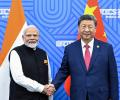
India and China celebrated the 75th anniversary of their diplomatic relations on Tuesday, with leaders from both countries exchanging congratulatory messages. The anniversary comes as the two countries are working to restore ties after a four-year freeze due to the military standoff in eastern Ladakh. Both countries have expressed a willingness to enhance strategic mutual trust and step up cooperation in various fields. The two sides are also exploring ways to rebuild ties and promote people-to-people exchanges.

Srikanth Kondapalli, professor in Chinese studies at Jawaharlal Nehru University and rediff.com columnist, will appear on the Rediff Chat to discuss the import of Xi's visit and what it bodes for the two nations, for Asia, and for the world at large.
India and China plan to celebrate the 50th anniversary of Panchsheel.
The year 2017 could be the third year of a double-digit growth in arrivals from China after years of low single-digit growth

It has been a prickly year for China-India ties with the Arunachal Pradesh boundary dispute poisoning bilateral rhetoric. In Copenhagen, Hindi-Chini Bhai Bhai is back in vogue with the two sides holding meetings up to six times a day, according to Environment Minister Jairam Ramesh.
As the festivities of Raksha Bandhan are upon us, colourful and decorated Rakhis are being sold in large numbers at markets all over the country.

'The war scenes in which Indian soldiers fight fearlessly and the powerful dialogues are meant to make the audience proud of the loyalty and valour of Indian soldiers,' observes Deepa Gahlot.

By appearing to privilege ideological affinity over strategic balance, India risks eroding the trust painstakingly built across West Asia. Once the perception takes hold that India's friendship is conditional and transactional, rebuilding credibility will be difficult, warns Amberish K Diwanji.
India and China, both emerging countries, should become "inseparable strategic partners" after overcoming the "deep scars" inflicted by the 1962 war and should make its 50th anniversary a starting point for a promising bilateral cooperation, the State-run media said on Wednesday.
Probably his only non-political undertaking in his three-day visit to the capital, Wen interacted with nearly 50 students of the school. He spoke for nearly an hour on Rabindranath Tagore, Mandarin, Chinese culture and calligraphy to the students.
Maintaining that resolution of the Tibetan issue was vital for betterment of Indo-China ties, the Dalai Lama on Saturday favoured "genuine friendship" between the two Asian giants, rekindling the Hindi-Chini bhai bhai spirit.
'Is there any peace and Olympic spirit in a flame which has become the symbol of Chinese repression, arrogance and thirst for domination in Asia?'
The joint exercise will begin on December 21 with the spotlight on anti-terrorism drills, with China expected to draw upon the experience of Indian troops known for expertise gained in their counter-insurgency operations.
Many in India still believe that the priority No 1 of India's foreign policy should be to make friends with China. Once again, there is nothing wrong to be China's 'friend' or even 'brother', but it should not be at the cost of India's interests or by bending backward over each whim and fancy of a single-party regime in Beijing.
Despite the recent thaw in relations, the border issue and China's relations with Pakistan continue to bother India. Can we trust Beijing?

If Patel had lived a few years more, he may or may not have become prime minister. But for sure, his presence would have kept Nehru in check, points out Harishchandra.

'J P Dutta's clownish treatment of history and hard-earned triumph demeans the efforts and sacrifices of real-life martyrs and bravehearts with its pompous ideas of valour, clunky writing and a cadre of lacklustre actors,' says Sukanya Verma.
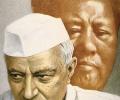
'Hindi-Chini Bhai Bhai? Don't you believe it. I don't trust the Chinese one bit,' Nehru told Gopalaswamy Parthasarathi before he traveled to China as India's ambassador. Asking GP to be ever vigilant, Nehru advised the diplomat to send telegrams on important matters only to him. Many such anecdotes from a long and eventful career as diplomat and bureaucrat crowd the pages of GP: 1912-1995, discovers Uttaran Das Gupta.

"China's ideology seems to be eliminating terrorism from its country but letting terrorist activities flourish in India," the Sena said.

Refusing to share in the euphoria of ally Bharatiya Janata Party over Prime Minister Narendra Modi's China visit, Shiv Sena on Monday accused the neighbouring country of pursuing a policy of "hugging from the front and stabbing from behind".

China does not have to give up what it took in 2020, it will never give up its claim to Arunachal Pradesh, Ladakh and other areas, and it has all the time now to plan its next surprise, points out Lieutenant General Prakash Katoch (retd).

'China did not expect India to show such strategic resolve in defending its territorial integrity.'
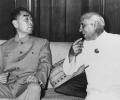
'Unquestionably, the spirit behind the Panchsheel agreement and the 'Hindi Chini bhai bhai' slogan were thrown overboard by the Chinese, and a trust deficit was injected between the two nations.' A revealing excerpt from General J J Singh's The McMahon Line: A Century Of Discord.

'On October 12-13, he started shivering from fear in his tent.' 'That was the time he wrote a letter to my mother to conduct Ganeshji's Atharvashirsha.' 'The moment he finished writing that letter, he told us, he felt serene calmness.'
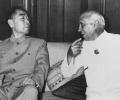
'The war of 1962 exposed the hollow intellectual foundations of Nehruvian foreign policy, especially vis-a-vis China and that is why it was such a shock.'
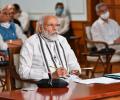
'As his party's Supreme Leader, Modi has led India down the wrong road by insisting on friendship with China even as its soldiers went about claiming territory,' argues Harishchandra Dighe.
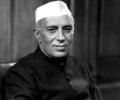
'India's first and longest-serving prime minister created -- or at the very least imagined -- a modern, democratic nation-State of the 20th century,' says Sunil Sethi.
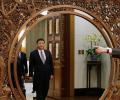
China's white paper on Asia-Pacific security cooperation extends an olive branch to India. It mentions India 15 times -- a record in all Chinese white papers issued so far. New Delhi's response will need to be carefully calibrated, says China expert Srikanth Kondapalli.
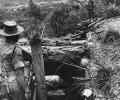
More than half-a-century after humiliation in the 1962 war, India is still not prepared to take on the Chinese dragon. Every now and then, that dragon flexes its muscles, reminding India the threat persists, says Virendra Kapoor.

'Magnanimity and appeasement have no place in the world of realpolitik as India has learned the hard way,' notes Vivek Gumaste in the first of a two-part column.
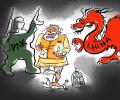
'China need not worry about a truly 'resurgent India'.' 'It's not going to happen.'
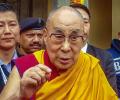
'The logical step is to challenge the very legitimacy of the Chinese claim over Tibet,' recommends Inspector General Gurdip Singh Uban (retd).

'We rarely choose to fight when the threat is still a nascent threat. When we do fight, we fight when the invaders reach Panipat and are preparing to knock on the gates of Delhi.'

Given the relative rates of gross domestic product growth, the differential will increase.

It is well-known, and the Brooks-Bhagat report vouches for it, that the real failure for the 1962 debacle against China was not military, but political, says Ram Madhav.

Major General Sujan Singh Uban, a legendary veteran of the Second World War, was a natural choice to raise, train and command the Special Frontier Force and mould them into a well oiled fighting machine, recalls his son Inspector General Gurdip Singh Uban (retd), who led SFF troops during the Kargil War.
'Delhi was not concerned.' 'It would continue sleeping for several more years, with the result that Indian territory is still occupied by China today,' says Claude Arpi.
It is a dark legacy bequeathed by Nehru to India. In its DNA lies the subconscious fount of India's schizophrenic geopolitics that forsook in one sweep all its historically-entrenched strategic interests in Tibet in favour of China, says R N Ravi, on the 60th anniversary of the Panchsheel Agreement.
 © 2026 Rediff.com - Advertise with us - Disclaimer - Privacy Policy - Sitemap - Feedback - About us - Terms of use - Grievances